

Why Leadership Development Keeps Failing—And What Actually Works

Organizations spend $366 billion annually on leadership development.
Three hundred sixty-six billion dollars.
Every year.
And yet, according to McKinsey, only 11% of companies believe their leadership development efforts produce the desired results.
That's not a training problem; that's a paradigm failure.
And understanding why leadership development fails is the first step toward fixing it.
Why Leadership Training Doesn’t Work
Conventional wisdom tells us leaders struggle because they lack the right skills. So senior leaders bring in leadership development organizations to train them. They offer communication workshops, strategic thinking seminars, executive presence coaching, and emotional intelligence assessments.
None of it is wrong, exactly. Leaders do need these skills.
But teaching a leader better communication techniques while they're operating from a dysregulated nervous system is like teaching someone proper running form while they have a broken leg. The skill isn't the problem—the foundation is.
Most leadership development programs seek to treat symptoms: They see a leader who struggles with difficult conversations and prescribe a framework for having difficult conversations. They see a leader who micromanages and coach them around delegation techniques. They see leaders who are burnt out, and offer meditation after their time management seminar.
What they don't see—what they're not designed to see—is the nervous system states driving all of it.
The Leadership Regulation Gap: What’s Really Missing
After fifteen years of coaching I’ve learned that the gap between good intentions and good leadership isn't knowledge. It's regulation.
A leader who can't regulate their own nervous system can't show up consistently for their team. They react instead of respond, escalate instead of de-escalate, and create the kind of environment they're trying to prevent—not because they don't know better, but because under stress, their body takes over.
This isn't the result of bad strategy, it’s the result of biology under pressure. Our nervous systems evolved to protect us, and they're very good at their job. The problem is that what feels like a solid strategy is often a protection pattern—the fight, flight, freeze, fawn, and flex responses that undermine everything effective leadership requires.
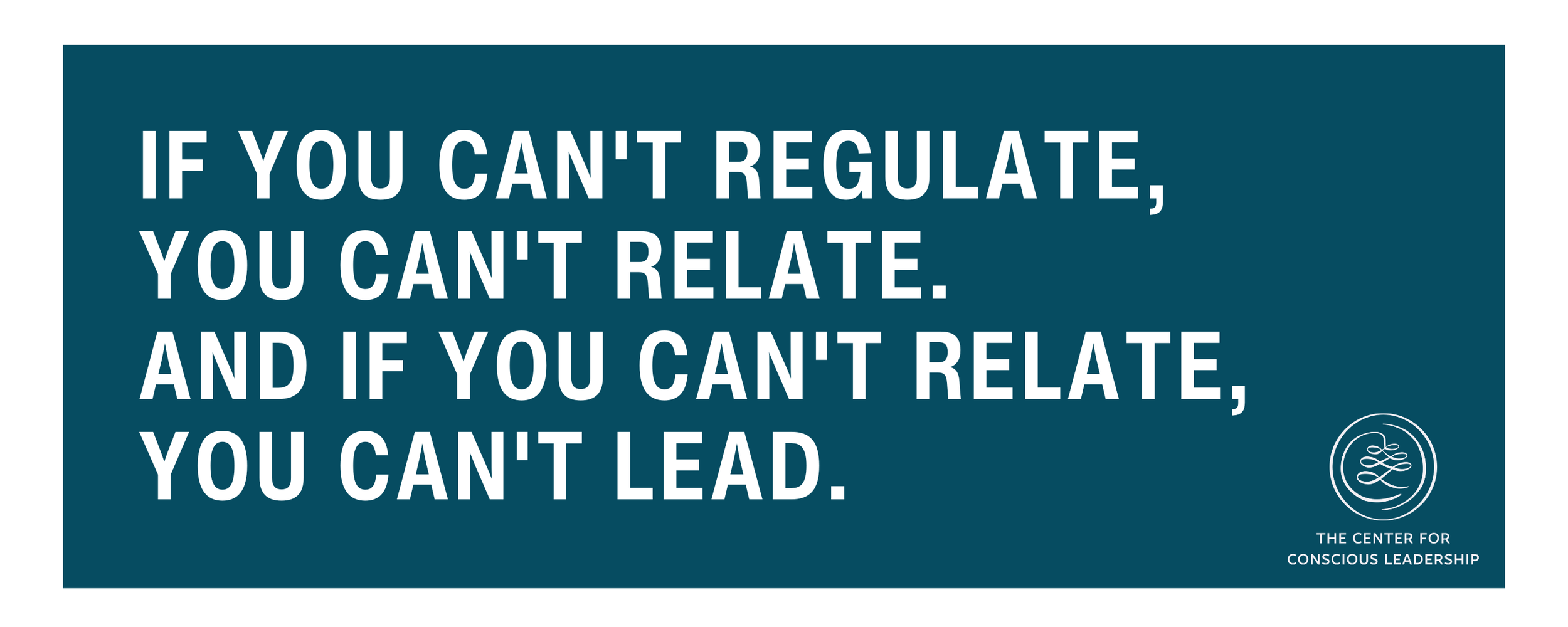
Because if you can't regulate, you can't relate. And if you can't relate, you can't lead.
What Makes Leadership Development Actually Effective
The leaders who transform—who successfully turn insight into embodied action—are the ones who work at the level of the nervous system, shifting their entire state, not just their state of mind.
This means developing interoception, the capacity to notice your own state in real time, and understanding your Window of Capacity, which enables you to recognize when you're moving into reactivity before you act from it. Leaders who operate at the level of nervous system regulation have practices that help them to return to their window of safety, engagement, curiosity, connection, and grounded agility as an ongoing discipline.
Transformational leaders also understand that your regulation isn't just about you: leaders set the nervous system tone for their entire organization.
A regulated leader creates safety that allows others to access their best thinking. A dysregulated leader triggers protection responses throughout the system—and then wonders why people aren't bringing their best.
We call this the Regulation Ripple Effect. Your state becomes a field-shaping presence, shaping the container everyone else operates within.
From Leadership Skills to Nervous System Regulation
We're not facing a skill gap—we're facing a paradigm gap.
Traditional leadership development asks: What should leaders know?
Conscious leadership development asks: Who do leaders need to become?
The first question leads to more content, more frameworks, more training hours. The second question leads to the kind of deep developmental work that actually changes behavior.
Conscious leadership development includes building self-awareness—not just intellectually understanding your patterns, but feeling them in your body before they drive your actions. Applied, embodied insight means learning to regulate—developing practices that help you stay grounded when everything around you is chaos. And it must include systems thinking—understanding that you're not leading individuals in isolation, but shaping a living system of systems that responds to your every move.
How to Lead Differently
If you've invested in leadership development—your own or your organization's—and wondered why the results haven't matched the investment, this might be why.
The good news: regulation is learnable.
We know about neuroplasticity, and we know the nervous system is transformable. The patterns that feel automatic can become conscious, and what's conscious can be interrupted, and therefore changed.
This kind of transformation requires a different kind of work than most leadership programs offer. It requires slowing down enough to notice what's actually happening in your body, applied practices, and the humility to admit that knowing what to do has never been the problem.
The friction you feel isn't failure.
It's the call to lead differently.
---
This is the foundation of our Trauma-Informed Leadership System — the methodology we're using to train hundreds of senior leaders to regulate, relate, and lead. See how it works here.
